
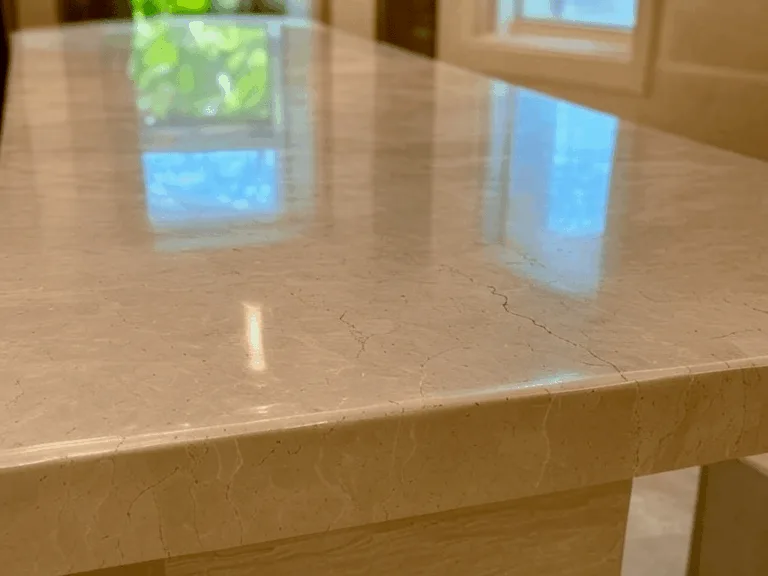
Travertine Restoration & Polishing Hawaii
Specialized Travertine Restoration, Polishing, and Sealing
Why Travertine Looks Dirty Even After Mopping
Travertine is not dirty tile. It is natural stone that needs the right reset. Because travertine is porous, pitted, and calcium-based, soil can settle below the surface level while acidic products, harsh cleaners, or the wrong maintenance process can dull, etch, or open the stone even more.
That is why a travertine floor can be mopped regularly and still look dark, cloudy, uneven, or worn. The problem may not be poor cleaning. The problem may be embedded soil, dark pores, surface etching, worn finish, or traffic wear that basic tile cleaning cannot correct.
Renue Hawaii evaluates the travertine first, then identifies whether the stone needs deep cleaning, extraction, honing, polishing, sealing, restoration, or repair review. The goal is to reset the stone so it looks cleaner, performs better, and becomes easier to maintain.
Mopping cleans the surface. Renue resets the stone.
Do not treat travertine like tile. Treat it like natural stone.
| What You See | What It Usually Means | Smart Next Step | Why It Matters |
|---|---|---|---|
| Floor looks dirty after mopping | Soil, residue, or dirty water may be sitting below the surface level | Travertine deep cleaning | More mopping can move soil around without removing what is embedded in the stone |
| Dark pits, pores, or grout lines | Soil and moisture may be trapped in natural voids, texture, or grout | Deep cleaning and extraction | Travertine needs stone-safe cleaning that reaches buildup without damaging the surface |
| Dull, cloudy, or etched finish | The stone surface may be chemically or mechanically worn | Honing or polishing review | Cleaning alone cannot restore clarity when the stone surface itself is damaged |
| Uneven shine or traffic wear | The travertine may need a deeper surface reset | Travertine restoration and sealing | Restoration can improve appearance and help protect the stone before replacement is considered |
| Cracks, loose tiles, missing fill, or severe holes | The issue may be physical stone damage, not surface buildup | Repair or replacement review | Repair should be reviewed when the stone is unstable or physically damaged |
Why Travertine Is Not the Same as Tile
Travertine is a natural calcium-based stone with pores, pits, voids, and surface sensitivity. Ceramic and porcelain tile are manufactured surfaces. Travertine is different because it can absorb residue, hold soil in open areas, and react poorly to harsh or acidic cleaners.
That is why treating travertine like tile can create problems. Stronger chemicals or aggressive cleaning may dull, etch, or open the stone instead of improving it.
Why Mopping Often Leaves Travertine Looking Dirty
Mopping removes surface soil, but travertine can hold buildup below the surface level. Soil, dirty water, moisture, cleaning residue, and fine particles can settle into pores, pits, grout lines, and natural texture.
When that happens, the floor may still look dark or uneven after it has been cleaned. The solution is not more mopping. The solution is stone-safe deep cleaning and extraction designed for travertine.
When Honing or Polishing Is Needed
Honing or polishing should be reviewed when travertine looks dull, cloudy, etched, scratched, or uneven even after proper cleaning. At that point, the issue is usually in the stone surface itself.
Cleaning removes soil. Honing and polishing refine the stone surface so clarity, smoothness, and the desired finish can be brought back when the travertine is a good candidate.
Why Sealing Matters After Travertine Cleaning or Restoration
Travertine can be more absorbent than denser stones, especially when the surface is open, worn, or heavily used. After cleaning or restoration, sealing can help improve stain resistance and make routine maintenance easier.
Sealing is not a substitute for cleaning or restoration. The stone should be cleaned, buildup should be removed, and the surface should be properly prepared before the right sealer is applied.
When Repair or Replacement Should Be Reviewed
Repair or replacement should be reviewed when travertine has loose tiles, cracks, missing fill, severe holes, unstable sections, or physical damage that cleaning and restoration cannot reasonably correct.
When the issue is dullness, embedded soil, dark pores, etching, or worn finish, restoration should usually be reviewed before replacement. The evaluation decides whether the stone can be brought back.
Travertine Filling Service: Restore Surface Integrity
Certified Technicians and Advanced Techniques for Superior Results
- Certified Technicians and Careful Inspection: Our certified technicians begin with a thorough inspection of your travertine surfaces, identifying specific needs such as filling, polishing, and sealing. Adjacent areas are meticulously taped off to protect them during the restoration process.
- Effective Stain Removal: We target and remove existing stains before polishing to prepare the surface for an optimal restoration and sealing process.
- Ongoing Quality Checks: Quality is our priority. Throughout the restoration process, our team conducts regular inspections to ensure your travertine meets the highest standards.
- Durable Protective Sealing: Following restoration, we apply a high-quality sealer, including a silica-based option for long-lasting protection. This barrier prevents dirt and staining while simplifying future maintenance.
- Prompt and Thorough Service: Our services are designed to minimize downtime, leaving your travertine surfaces clean, protected, and ready for use within hours.
Revolutionary Silica-Based Technology for Travertine Protection
Travertine’s porous nature makes it particularly vulnerable to stains, etching, and wear in high-traffic areas or daily use. Our silica-based technology offers a groundbreaking solution that goes beyond traditional sealers. This advanced process forms a covalent bond with the stone, creating a silica-based protective layer that is 100% transparent, durable, and resistant to wear.
- Durable Protection: The covalent bond creates a robust silica layer that guards against scratches, stains, and chemical damage, ensuring long-lasting durability for travertine in high-traffic areas.
- Preserves Natural Beauty: Unlike films, the silica-based layer is virtually invisible and maintains the natural textures and patterns unique to travertine.
- Slip Resistance: Perfect for floors, the protective layer enhances safety by maintaining a non-slick surface, even when wet.
- Long-Term Efficiency: With protection lasting 5–10 years, this solution drastically reduces the need for frequent reapplications and minimizes maintenance efforts.
- Customizable Finish: Available in both clear polished and matte finishes, it enhances the aesthetic appeal of travertine to suit any design preference.
- Eco-Friendly and Safe: Designed to protect travertine while being environmentally friendly and safe for indoor use, even in sensitive environments.
This cutting-edge protection ensures your travertine surfaces remain vibrant, safe, and resilient for years to come, making it the ideal choice for both residential and commercial spaces.
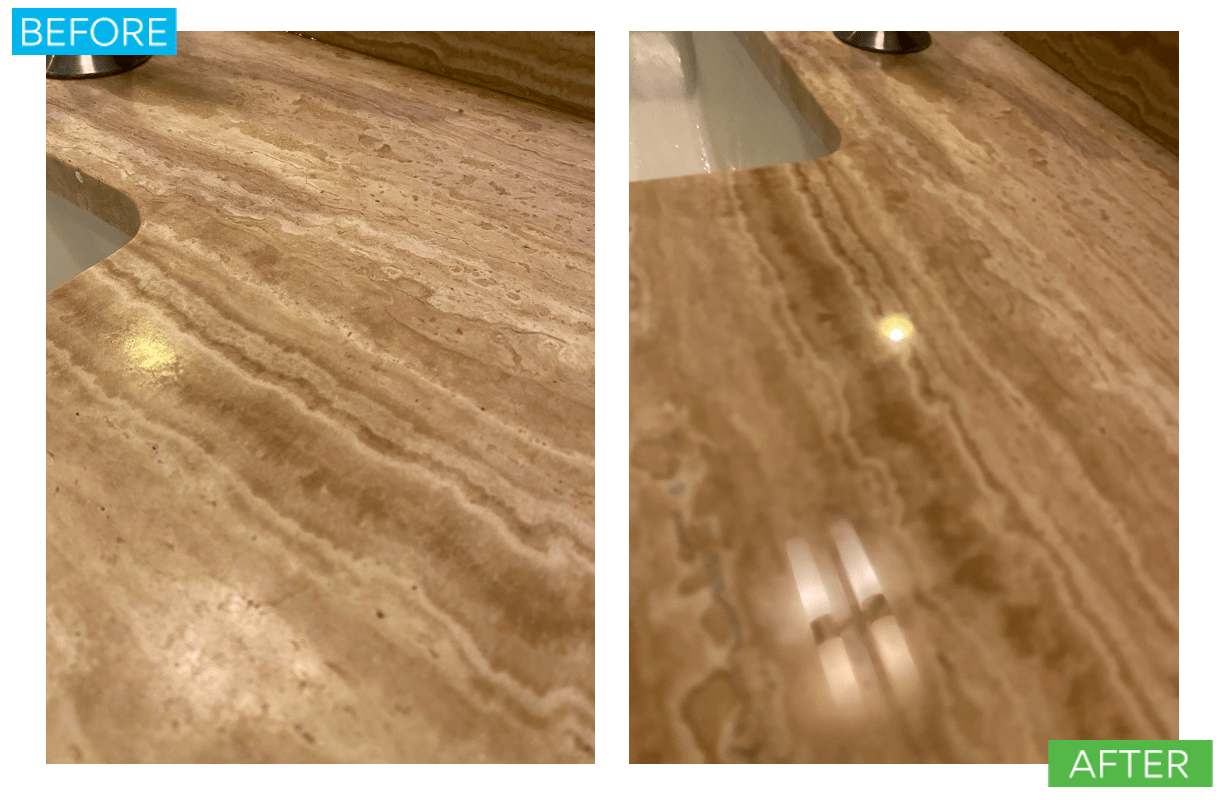
Advanced Travertine Restoration and Polishing for Dramatic Results
Travertine Maintenance: Ensuring Safety and Durability
Related Marble and Natural Stone Restoration Services
Travertine is part of a larger natural stone care system. For properties with marble, limestone, terrazzo, granite, or mixed stone surfaces, Renue Hawaii also provides marble restoration and sealing service in Hawaii for polishing, etch correction, sealing, and long-term surface protection.




Frequently asked questions about Travertine Restoration & Polishing Service
Our travertine restoration and polishing service is built for hotels, resorts, restaurants, and condo properties across Oahu, Maui, and the Big Island. We focus on lobby floors, elevator landings, guest corridors, pool decks, restrooms, and condo common areas where porous travertine is showing wear, staining, or etching that daily cleaning cannot correct.
We address dull traffic lanes, etch marks from cleaners and spills, embedded soil, light to moderate scratches, grout discoloration, and uneven sheen from past spot repairs. In many cases we can also refill open holes and pits so the floor looks cleaner, more uniform, and easier for your team to maintain.
Most properties schedule professional travertine deep cleaning, honing, and sealing at least every one to three years, depending on traffic, soil load, and exposure to food, beverages, or pool chemicals. High traffic lobbies, entries, and pool surrounds often benefit from annual service, while lighter use areas can follow a longer rotation once a strong baseline is established.
We start with a detailed clean to remove surface soil and residues. From there we use diamond honing and polishing to even out wear and achieve the desired finish, from honed to higher sheen. Where needed, we fill open holes and voids with compatible materials, then apply a penetrating sealer to help protect against future staining and support daily maintenance.
Yes. Travertine naturally has voids that can open up over time. As part of restoration we can fill many holes, pits, and small chips with appropriate fillers to smooth the surface and reduce soil collection. While not every defect disappears completely, the floor typically looks cleaner, more consistent, and less pock marked.
We match the finish to your property and use case. Travertine can be restored to a honed, satin, or higher sheen finish, and on pool decks or wet areas we focus on finishes that balance appearance with slip resistance. We discuss sheen levels in advance so the outcome fits both brand standards and safety expectations.
Timing depends on the size of the area and level of restoration. Typical lobby or corridor sections can often be completed and ready for light foot traffic again within the same day or overnight, once floors are clean, dry, and inspected. After restoration, we can support you with periodic deep cleaning and maintenance visits so your housekeeping and engineering teams can keep the travertine looking its best between major projects.
Ready to Restore Your Property?
Partner with Renue Hawaii for expert deep cleaning and restoration services tailored for hotels, resorts, and commercial properties across Oahu, Maui, and the Big Island.